Breaking the Three-Kilometer Barrier: The Science Behind Modern Record Shots
What does it take to hit a target at 3,500 meters? A deep dive into the ballistics, equipment, and environmental factors behind the longest confirmed shots.

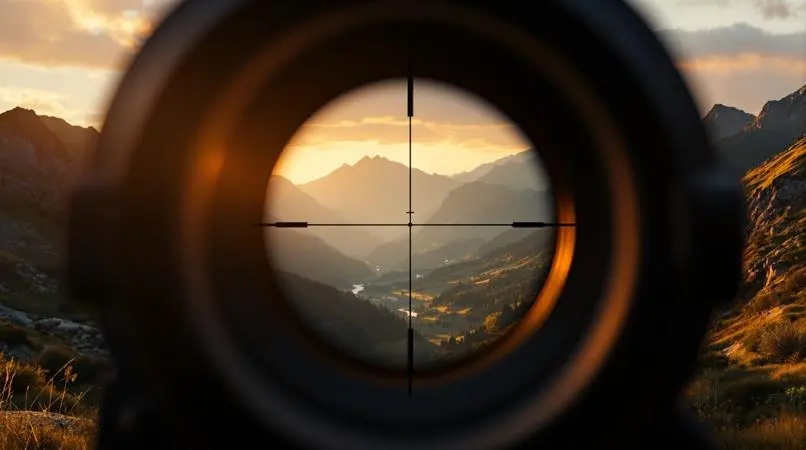
At 3,540 meters — roughly 2.2 miles — a bullet fired from a McMillan TAC-50 rifle takes approximately 10 seconds to reach its target. During that time, it drops over 150 meters, is pushed sideways by wind that may be blowing differently along different segments of its flight path, and loses more than half its initial velocity. Hitting a human-sized target at this distance requires not just skill, but a deep understanding of physics, meteorology, and materials science.
The Physics Problem
At extreme range, every variable matters. Gravity causes a roughly parabolic trajectory with massive vertical drop. The Coriolis effect — the apparent deflection caused by Earths rotation — becomes significant at distances beyond 1,000 meters. At 3,500 meters, a bullet fired north in the Northern Hemisphere can drift over 30 centimeters to the right due to Coriolis alone.
Spin drift, caused by the bullets rotation, adds additional horizontal deflection. Aerodynamic drag varies with air density, which changes with altitude, temperature, and humidity. Even the bullets transition from supersonic to subsonic flight — which typically occurs somewhere beyond 1,200 meters — introduces turbulence and instability that must be accounted for.
The Equipment Equation
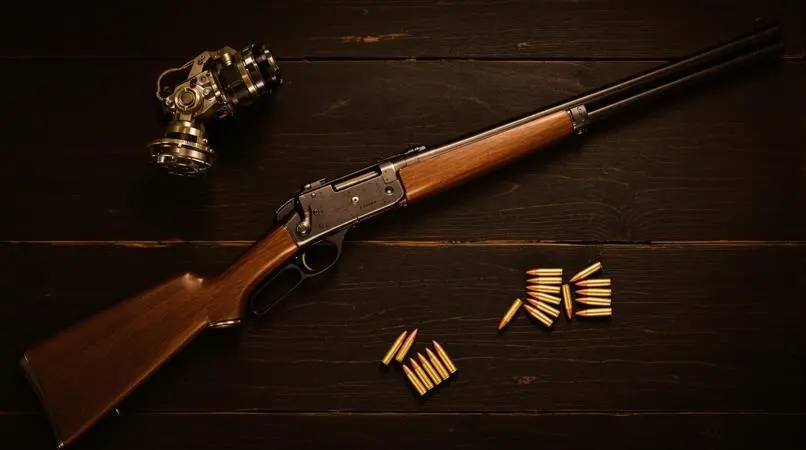
Record-setting shots demand specialized equipment. The .408 CheyTac, .416 Barrett, and .50 BMG cartridges dominate the extreme long-range world, offering heavy projectiles with exceptionally high ballistic coefficients. These bullets — often weighing 400–750 grains — are designed to maintain velocity and resist wind drift far better than lighter projectiles.
The rifles themselves are built to extraordinary tolerances. Actions are true within thousandths of an inch. Barrels are stress-relieved and cryogenically treated. Chassis systems provide rigid, repeatable mounting for optics. Every component is selected and assembled to eliminate the tiny variations that, at three kilometers, translate into meters of dispersion.
Reading the Wind
Wind reading is perhaps the most challenging skill in extreme long-range shooting. At 3,500 meters, a bullet may pass through multiple wind zones — each with different speeds and directions. The shooter must read wind indicators along the entire flight path: mirage, vegetation movement, dust, and flags placed at intervals along the range.
Modern ballistic solvers can model complex wind patterns, but the input data is only as good as the shooters observations. This is where experience and intuition become irreplaceable — the ability to synthesize dozens of environmental cues into a firing solution that accounts for conditions no computer alone can fully model.
The Human Element
Beyond the physics and equipment, the human factor remains paramount. The shooter must control their breathing, heart rate, and trigger press with absolute precision. At extreme range, a trigger jerk that moves the rifle by a millimeter translates into a miss measured in meters. The mental discipline to execute perfectly under pressure — knowing that each shot represents months of preparation — is what separates record-holders from the merely skilled.