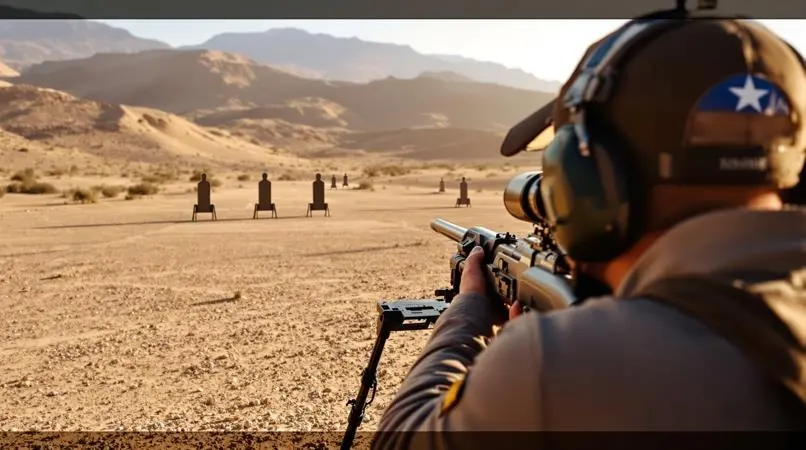
The Evolution of Rifle Optics: From Simple Scopes to Smart Targeting Systems
How telescopic sights evolved from basic 2× magnification tubes in World War I to todays integrated ballistic computers and thermal imaging systems.
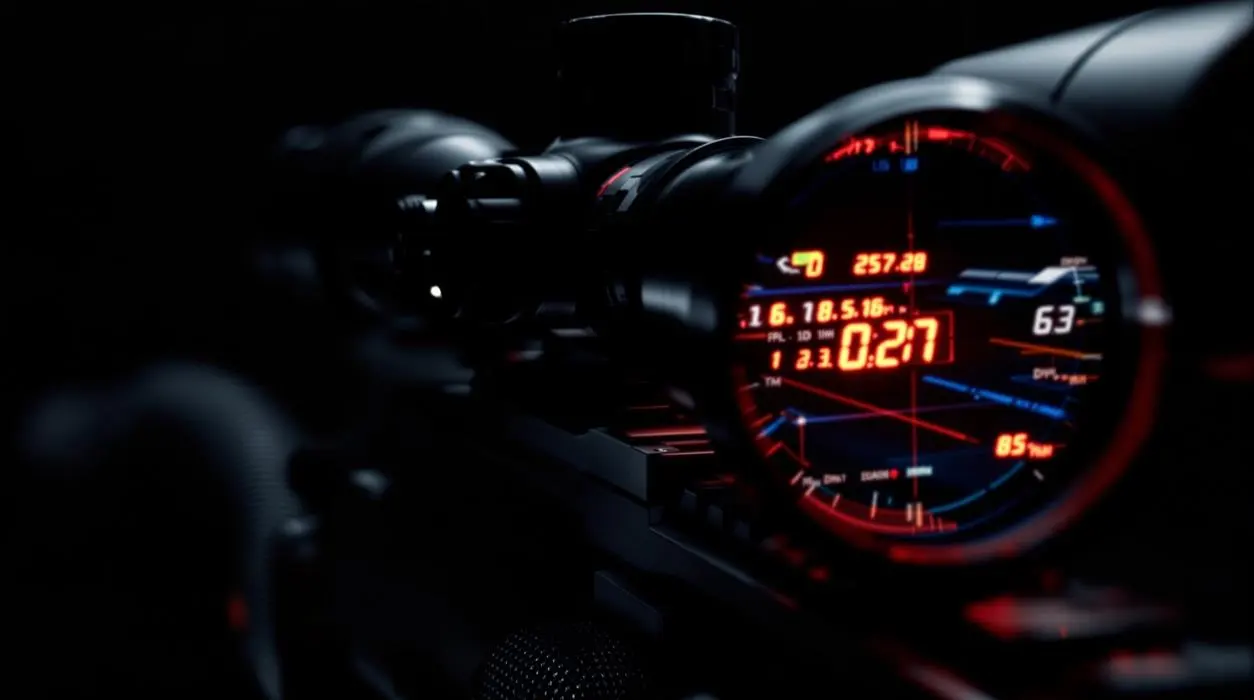
Table of Contents
When the first sharpshooters took to the battlefields of the early 20th century, they relied on little more than iron sights and instinct. Today, a modern precision rifle scope is a marvel of optical engineering, integrating laser rangefinding, atmospheric sensors, ballistic computation, and digital reticle projection into a single compact unit.
The Early Days: Magnification Arrives
The concept of mounting a telescopic sight on a rifle dates back to the American Civil War, but practical military adoption began in earnest during World War I. German forces deployed scoped Gewehr 98 rifles with 2.5× to 4× magnification, giving their Scharfschützen a decisive advantage in trench warfare.
These early scopes were fragile, prone to fogging, and required careful handling. The mounts were often offset to allow use of iron sights as backup, and the optical quality — while impressive for the era — would be considered primitive by modern standards. Yet even 3× magnification fundamentally changed what was possible on the battlefield.
World War II: Standardization and Mass Production
By World War II, every major power had developed standardized sniper optics. The Soviet PU scope (3.5×21mm) equipped the Mosin-Nagant, the British No.32 scope (3.5×) served on the Lee-Enfield No.4(T), and American forces used the Weaver 330C and Unertl scopes on the M1903A4.
These scopes shared common limitations: fixed magnification, simple crosshair reticles, and susceptibility to moisture. However, they were rugged enough for combat and provided the magnification needed for engagement distances of 400–800 meters — the practical limit of most combat sniping at the time.
The Cold War Revolution: Variable Power and Mil-Dot Reticles
The 1960s and 1970s brought two transformative innovations: variable magnification and the mil-dot reticle. Scopes like the Redfield 3-9× Accu-Range allowed snipers to adjust magnification based on the tactical situation, while the mil-dot reticle — adopted by the US Marine Corps in the 1980s — enabled rapid range estimation without separate equipment.
The Soviet PSO-1 scope, introduced with the Dragunov SVD in 1963, was revolutionary in its own right. It featured an integrated rangefinder reticle, infrared detection capability, and a built-in bullet drop compensator calibrated for 7.62×54mmR ammunition. This integrated approach foreshadowed the smart optics of today.
The Modern Era: First Focal Plane and Beyond
The shift to first focal plane (FFP) reticles marked another major advance. In FFP scopes, the reticle scales with magnification, meaning holdover and windage marks remain accurate at any power setting. Combined with Christmas tree-style reticles offering multiple aiming points, modern snipers can engage targets with unprecedented speed and precision.
Schmidt & Bender, Nightforce, Vortex, and Leupold now produce scopes with optical clarity that would have seemed impossible a generation ago. Multi-coated lenses transmit over 95% of available light, and ruggedized construction ensures zero retention through extreme conditions.
Smart Optics: The Digital Frontier
The latest generation of smart optics represents a paradigm shift. The TrackingPoint system, introduced in 2013, integrated a laser rangefinder, ballistic computer, and digital display into the scope itself. The shooter tags the target, the system calculates the firing solution, and the rifle fires only when perfectly aligned.
Military systems like the US Armys Integrated Visual Augmentation System (IVAS) and the Smart Shooter SMASH technology push even further, using augmented reality overlays and fire-control algorithms to enhance shooter performance in complex combat environments.
What Comes Next?
The convergence of artificial intelligence, miniaturized sensors, and advanced materials suggests a future where optics actively assist the shooter — computing firing solutions in real time, compensating for environmental variables automatically, and perhaps even identifying and prioritizing targets. Whether this represents the natural evolution of marksmanship or a fundamental change in what it means to shoot precisely remains an open question.