How Long-Range Precision Changed Over the Last Century
From iron sights and instinct to laser rangefinders and ballistic computers — the story of how technology, training, and battlefield experience transformed marksmanship into a science of extreme precision.
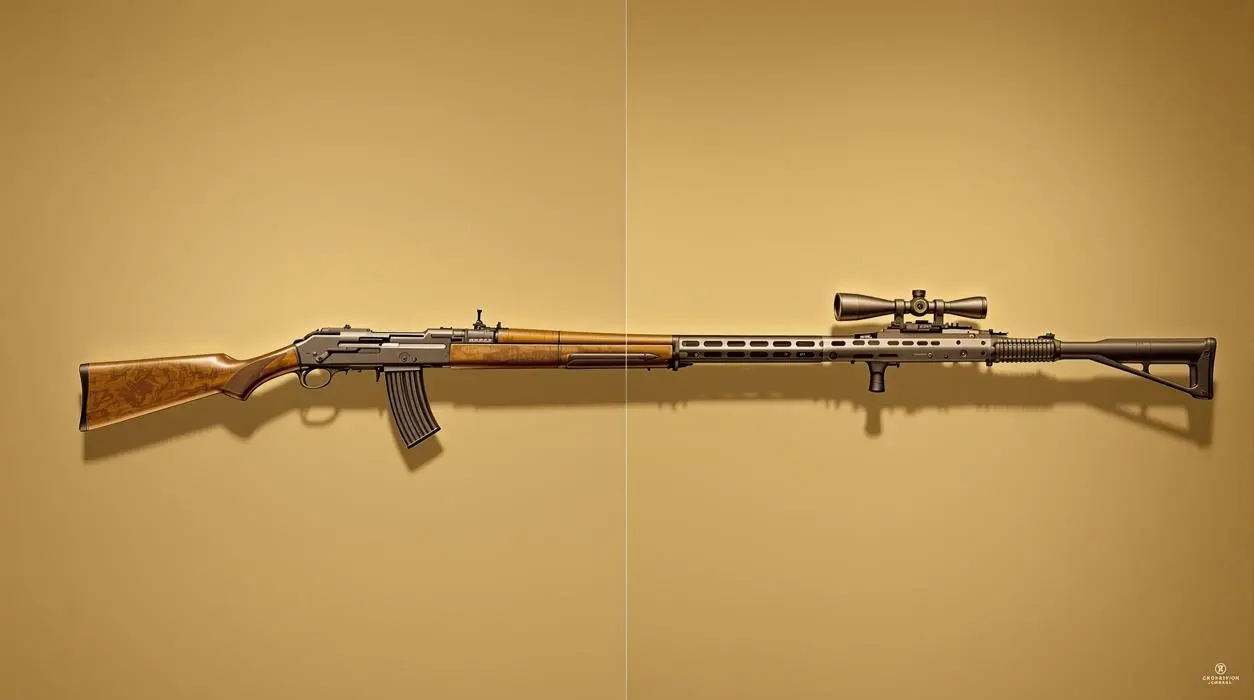
Table of Contents
In 1914, a skilled rifleman with a scoped Gewehr 98 could reliably engage targets out to 400 meters. Today, confirmed hits at 3,500 meters are a reality. The century between these two data points represents one of the most dramatic technological and doctrinal evolutions in military history.
1914-1918: The Birth of Sniping
World War I created the modern sniper. German Scharfschützen with scoped rifles demonstrated that precision marksmanship could influence the battlefield far beyond simple infantry fire. Allied nations scrambled to develop their own optics and training programs. By 1918, every major power had dedicated sniper units.
1939-1945: Industrial-Scale Precision
World War II industrialized sniping. The Soviet Union, having learned painful lessons from Finnish snipers in the Winter War, deployed tens of thousands of trained marksmen on the Eastern Front. The Mosin-Nagant PU sniper rifle became one of the most numerous precision rifles ever produced.
Meanwhile, the United States Marine Corps developed its own sniper doctrine in the Pacific, and German forces continued to refine their approach with the Karabiner 98k and advanced optical systems.
1960s-1970s: The Semi-Automatic Revolution
The Soviet Dragunov SVD, introduced in 1963, changed the paradigm. A semi-automatic rifle designed specifically for designated marksmen rather than dedicated snipers, it offered a rate of fire that bolt-action rifles could not match. The concept of the designated marksman — a squad-level precision shooter — was born.
In Vietnam, the US Marine Corps rebuilt its sniper program from scratch, developing training methods and equipment that would influence precision shooting for decades.
1980s-1990s: The .338 Lapua Magnum Era
The introduction of the .338 Lapua Magnum cartridge and the Accuracy International Arctic Warfare platform in the 1980s and 1990s extended the effective range of military sniper rifles beyond 1,500 meters. The aluminum chassis system, quick-change barrel, and match-grade ammunition set new standards for factory precision.
2000s-Present: The Digital Age
Laser rangefinders accurate to within centimeters at multiple kilometers. Ballistic computers that account for two dozen environmental variables. Smart scopes that integrate targeting, ranging, and firing solutions. The modern precision shooter has tools that would have seemed like science fiction to the marksmen of previous generations.
Yet the fundamentals remain: patience, discipline, wind reading, and trigger control. Technology amplifies skill but does not replace it. The century of evolution has not changed what matters most — the human element behind the rifle.