Night Vision Generations: From Gen 0 Starlight to Gen 4 Filmless Tubes
The first night-vision systems did not simply amplify darkness. They converted invisible infrared radiation into a visible image, often with an active infrared lamp that announced the user's presence to anyone equipped to detect it. The later shift toward passive starlight viewing changed the tactical value of the technology, while successive improvements in photocathodes, microchannel […]
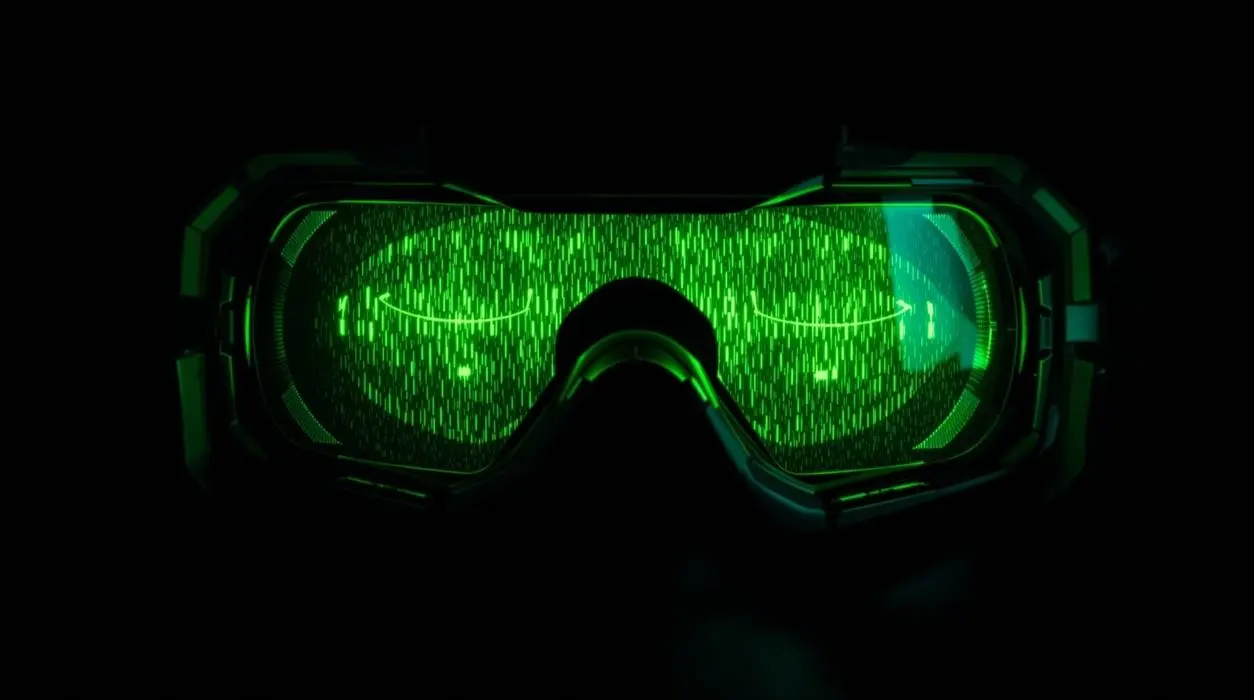
The first night-vision systems did not simply amplify darkness. They converted invisible infrared radiation into a visible image, often with an active infrared lamp that announced the user's presence to anyone equipped to detect it. The later shift toward passive starlight viewing changed the tactical value of the technology, while successive improvements in photocathodes, microchannel plates and power control made the image brighter, cleaner and more usable.
The labels Gen 0, Gen 1, Gen 2, Gen 3 and Gen 4 are useful shorthand, but they are not a perfectly uniform international standard. They describe broad technological stages, and manufacturers have sometimes used them differently. The chronology becomes clearer when it is organized around the changes that altered what an image intensifier could do.
Gen 0 and the active-infrared breakthrough
The earliest practical military night-vision equipment emerged during the Second World War. German systems such as the Zielgeraet 1229, known as Vampir, paired an infrared illuminator with an electronic image converter for use with the StG 44. The equipment was bulky, power-hungry and limited in field of view, but it demonstrated that darkness could be overcome with an electro-optical system rather than ordinary visible light.
This technology is commonly placed in Gen 0. Its image converters used photocathodes that responded primarily to near-infrared energy. Because the available ambient light was usually insufficient, the system supplied its own illumination. The illuminator's infrared output could not be seen by the unaided eye, but it was not invisible to another compatible night-vision device.
Postwar designs refined the concept. Early American systems, including the M1 and M3 infrared sniper scopes associated with the Korean War period, still depended on active illumination. Their historical importance lies less in image quality than in establishing a workable chain from infrared scene, to photocathode, to amplified visible image.
Calling these systems "starlight scopes" can be misleading. Gen 0 equipment was sometimes described broadly as night vision, but true passive starlight operation required much greater sensitivity than most active-infrared arrangements could provide.
Gen 1 makes passive viewing practical
The next decisive change was the move toward passive operation. Gen 1 tubes improved photocathode sensitivity and used electrostatic focusing, allowing some systems to work from moonlight, starlight and other weak natural illumination without an infrared lamp. They remained far from modern standards, but a user no longer needed to illuminate every scene actively.
The familiar AN/PVS-2 illustrates this transition. Developed for the U.S. military during the 1960s, the large Starlight Scope was a passive night-vision sight intended for small arms and crew-served weapons. Its designation and service history are well documented, although descriptions of specific deployments and quantities vary across secondary accounts.
Gen 1 devices generally produced a soft image with noticeable distortion toward the edges. A bright light could cause blooming or temporary loss of detail, and the single-stage architecture offered limited gain compared with later systems. The characteristic image was often green, but that color came from the phosphor screen used to display the intensified image, not from the original scene.
The practical consequence was substantial. Passive viewing reduced the need for an external infrared source, made the equipment less conspicuous to other night-vision users and opened the way for observation and aiming in conditions where an active lamp was unsuitable. Gen 1 was still fragile and optically imperfect, yet it changed night vision from an illuminated search system into a more independent sensor.
Gen 2 adds the microchannel plate
Gen 2's defining change was the introduction of the microchannel plate, or MCP. The MCP is a thin plate containing millions of microscopic channels. Electrons released by the photocathode enter those channels and trigger cascades of additional electrons, greatly increasing the signal before it reaches the phosphor screen.
That architecture delivered more gain, better resolution and improved performance in lower light than most Gen 1 equipment. It also permitted more compact tube designs. The AN/PVS-5, widely associated with the Cold War era, became one of the best-known military Gen 2 night-vision systems, although individual tube configurations and production versions were not identical.
The improvement was not just a matter of a brighter picture. A stronger signal preserved useful detail when illumination fell, while the MCP gave designers a path toward smaller and more practical goggles, sights and observation instruments. Gen 2 systems could still show geometric distortion, edge softness and bright-light blooming, but the gap between laboratory capability and field equipment narrowed.
Later Gen 2 developments added improved photocathode materials, better fiber-optic manufacturing and more refined electronics. Some commercial products marketed as "Gen 2+" combine several such improvements. That suffix is not a separate universally defined generation; it normally indicates an enhanced version within the Gen 2 family.
Gen 3 moves to gallium arsenide
Gen 3's major advance was a gallium arsenide photocathode, generally written as GaAs. Compared with the photocathodes used in earlier mainstream systems, GaAs offered stronger sensitivity in the near-infrared and improved response under very low-light conditions. Gen 3 tubes also commonly used an ion-barrier film over the MCP to protect the photocathode from damaging positive ions produced during operation.
The combination supported the high-performance military image intensifiers associated with late Cold War and post-Cold War U.S. equipment. Systems such as the AN/PVS-7 and AN/PVS-14 are commonly identified with Gen 3 technology, though the exact tube specification matters more than the housing designation alone. A PVS-14 housing can accept tubes with different performance characteristics, and not every unit represents the same production standard.
The ion-barrier film improved tube durability, but it also reduced some incoming signal. Manufacturers therefore pursued improvements in photocathode efficiency, MCP construction and power-supply control to recover sensitivity. This is one reason generation labels alone cannot fully describe an image intensifier's performance.
Military procurement introduced another layer of complexity. U.S. tube performance has been shaped by contracts and specification families, sometimes referred to through omnibus requirements such as the Army's OMNI series. Those specifications can distinguish minimum performance thresholds, but they do not transform every tube into a wholly separate generation. A tube's signal-to-noise ratio, resolution, gain, halo and blemish limits can matter more than the printed generation label.
Gen 4 and the filmless argument
The phrase Gen 4 is most closely associated with filmless image intensifier tubes. In this design, the ion-barrier film is removed or substantially changed, allowing more of the photocathode's signal to reach the MCP. The result can be improved low-light sensitivity and better signal-to-noise performance, particularly when the tube is paired with suitable automatic power control.
Filmless construction is not magic, and the term does not guarantee a single performance level. Removing the film can affect durability, background noise, bright-light behavior and production requirements. Tube quality, photocathode response, MCP characteristics, electronics and manufacturing tolerances all remain decisive.
There is also a naming dispute. "Gen 4" has been used commercially and in technical discussion, but the U.S. military has not consistently treated it as an official, universally separate generation in the same way the market often presents it. Some advanced Gen 3 tubes use filmless or thin-film approaches while still being sold within a Gen 3 specification family. For that reason, "filmless" is often the more precise description than Gen 4.
Automatic gating is another important part of the modern story. An autogated power supply rapidly controls tube voltage as scene brightness changes, helping the device cope with sudden light and preserving image quality across varying conditions. Autogating is an electronics feature, not a generation by itself; a tube may be described by both its generation family and its gating behavior.
Why the labels still need a specification sheet
The generational sequence remains useful because each stage marks a real engineering shift: active infrared conversion, passive low-light viewing, MCP amplification, GaAs photocathodes and the pursuit of higher transmission through filmless designs. It becomes unreliable when treated as a complete ranking system.
Two tubes carrying the same generation label can differ in resolution, signal-to-noise ratio, gain, equivalent background illumination, halo size and blemish standards. Optical design matters as well. A tube mounted in a poorly matched objective or eyepiece will not deliver the same result as the same tube in a better optical system.
Night vision also has a boundary that generation labels cannot remove. Image intensifiers need photons. In dense fog, heavy smoke, thick foliage or absolute darkness, amplification cannot create detail that never reaches the objective lens. Thermal imagers operate by a different physical principle and should not be treated as a later night-vision generation.
The historical progression therefore ends not with a universally settled Gen 4, but with a more complicated design landscape. Modern filmless and thin-film tubes extend the image-intensifier principle; they do not erase the trade-offs that shaped every earlier stage.