Before You Trust the Caption: Reading Historical Photographs Carefully
A photograph arrives with a tidy description: a name, a place, a year. After enough reposts, the description can start to feel like part of the image. It isn’t. The pixels show one thing; the caption makes claims about what they show. Keeping those two things apart is a useful habit when reading military history. […]
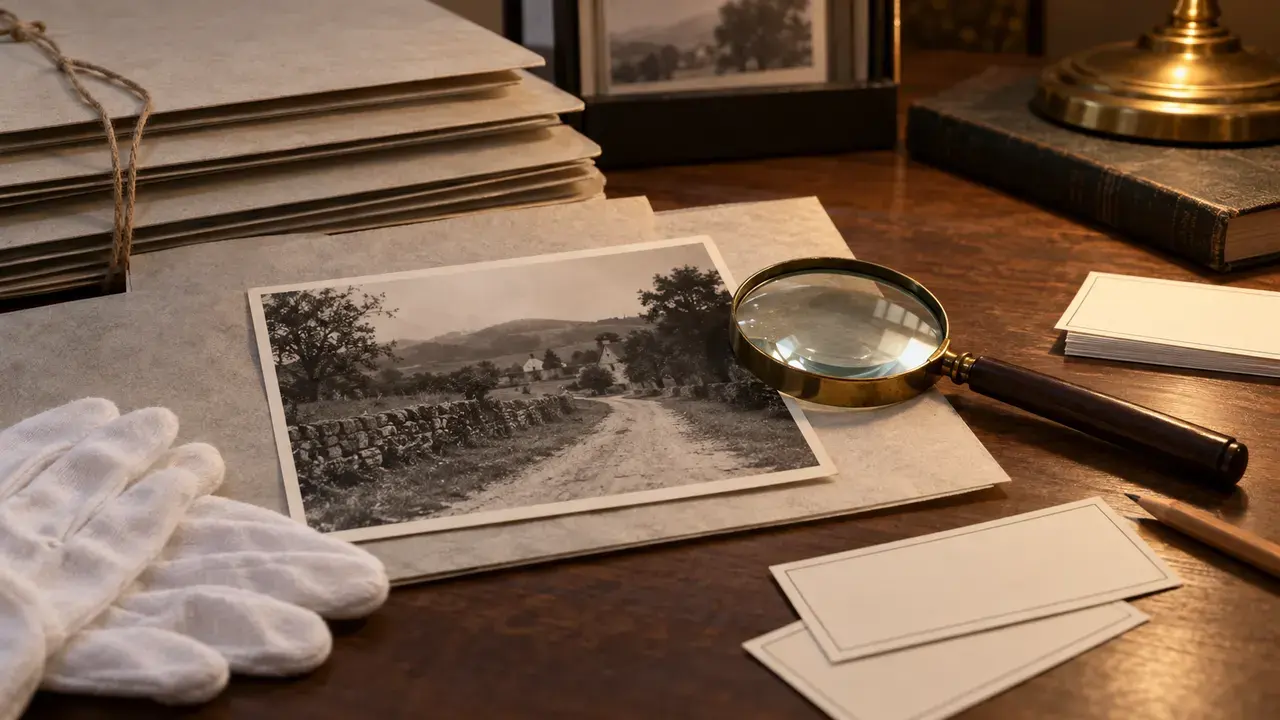
A photograph arrives with a tidy description: a name, a place, a year. After enough reposts, the description can start to feel like part of the image. It isn’t. The pixels show one thing; the caption makes claims about what they show. Keeping those two things apart is a useful habit when reading military history.
That habit matters on a site concerned with historical people and records. A recognizable-looking face or piece of equipment can invite a much more precise identification than the available evidence supports. An uncertain caption is not improved by repeating it more confidently.
Save where you found it
Before following the story, record the page address and the caption as it appeared there. Note the date you accessed it. If the page credits an archive, follow that credit rather than treating the repost as the end of the search.
A simple research note might have three lines: where the copy appeared, what the caption claimed, and where the original record might be. Leave that last line blank if you do not know. A visible gap is easier to investigate than a source attribution filled in from memory.
Read the catalogue entry
The US National Archives explains that original captions, when available, can appear in a photograph’s catalogue description. Its catalogue-search guidance is useful for finding that information beyond the thumbnail. Record the identifier as well as the title so another reader has a practical route back to the item.
Read nearby qualifications carefully. A catalogue may identify something broadly while a later website supplies a precise day or a person’s full name. The extra detail needs its own support. It does not become archival evidence merely because an archive is mentioned elsewhere on the page.
Look before accepting the story
Make a short description of what you can actually see, without using the proposed names. Two people beside a vehicle is an observation. Two named people preparing for a particular operation is a larger claim. It may be correct, but the image alone may not establish it.
The National Archives’ photograph-analysis worksheet asks readers to consider the caption and other information surrounding an image. Use that as a prompt to slow down. A missing caption, a cropped edge or an indistinct background is a reason to ask another question, not a space that needs an imaginative answer.
Compare copies without counting reposts as witnesses
Suppose five websites repeat the same sentence. If they all copied one uncredited upload, you still have one unsupported caption. Look for separate records or a source that explains how the identification was made.
Keep the full image beside any crop you are examining. A tighter version may omit writing, another person or part of the setting. That does not prove deception; people crop photographs for ordinary layout reasons. It does mean the crop cannot tell you everything the wider frame contains.
Write uncertainty into the caption
If the place is established but the person is not, say so. Do not turn a tentative suggestion into a firm identification simply because a shorter caption looks cleaner. Equally, avoid dismissing an image altogether when only one part of its description is disputed.
For your own notes, separate the archived wording from later comments. Keep a record of corrections and the evidence behind them. Someone returning to the subject should be able to see why an identification changed, rather than finding two incompatible labels with no explanation.
The result may be a less dramatic caption. That is a reasonable price for a description another reader can check. Historical photographs are interesting enough without asking them to prove details that their surviving records cannot support.